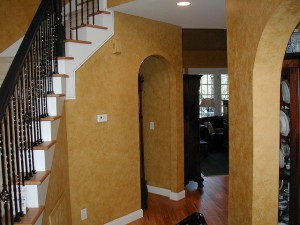
 Faux finishing is a great way to personalize your home by going a step or two beyond a simple coat of paint by creating rich textures and patterns for your wall, cabinets or other home fixtures. Faux finishes can also be useful in covering small surface flaws and imperfections.
Knowing when and where to apply faux finishes is important, as they don’t always work with every surface. Here’s a look at some of the most popular faux finishes and where they work best:
Venetian Plaster – Gives the surface a marble-like appearance by creating depth and leaves a smooth but slightly textured feel. This finish is silky and cleans easily so it would be best suited for kitchens and baths.
Crackling -This gives a weathered appearance, as if the surface has been exposed to the elements for an extended period of time. Because this is a less subtle finish, it would work best for small spaces, cabinets, tables and other furniture. Not recommended for large surfaces such as living room walls.
Sponging – This is a faux painting technique that can be dramatic or subtle, depending on the colors chosen. Typically, two similar colors are used to create the effect. This finish is versatile and could work on a variety of surfaces.
Ragging – This faux painting technique imitates look and texture of aged leather or fabric. This is a great option for anyone looking for a dramatic look that isn’t too over-the-top. Works well for smaller, intimate spaces such as studies or bedrooms.
For more ideas on faux finishes, contact Colour Solutions for a free estimate. 910-686-3067
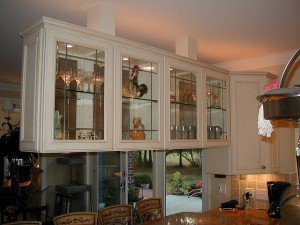 Giving your kitchen cabinets a fresh coat of paint can improve their look and give your room a completely different appearance.
 Isn’t the digital age wonderful? At the press of a button (or tap of a touchscreen), we can share pictures, compare prices and even design a home. Did you know you can even choose paint colors for your home through mobile apps?
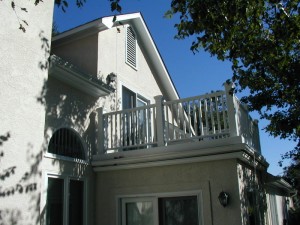 If your home or commercial building has gutters, be sure to keep them clear and clean for optimal use. Once gutters become clogged or damaged, they fail to divert rainwater from your roof away from your home and foundation. This could possibly lead to expensive damage down the road. Gutters that are full of debris will become too heavy for the fasteners to support them, which can lead to the gutters becoming detached from the roof (sometimes pulling part of the roof away with it).